Dual Motor Load Behavior in High-Power Electric Bikes
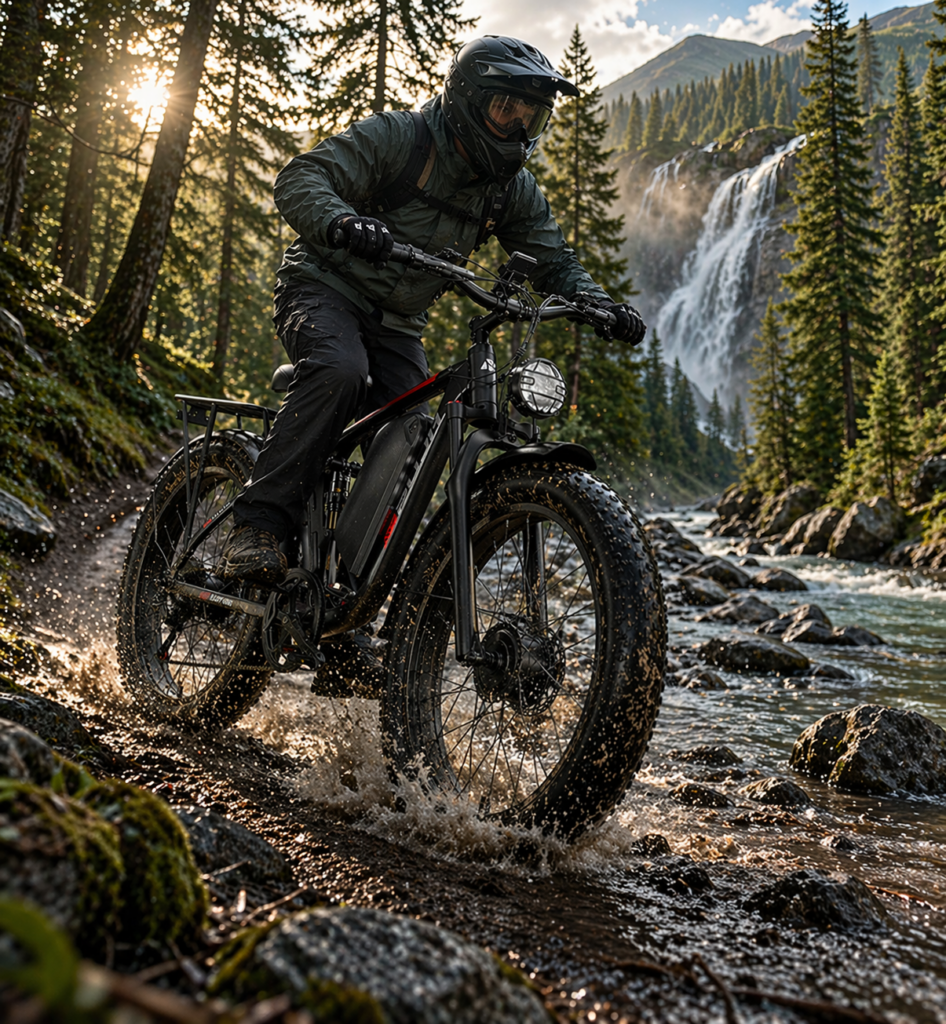
Two motors draw from the same battery.
Both wheels can apply torque at once.
The system gains traction and output - but the energy demand compounds instead of distributing.
Featured products
How distributed propulsion changes energy draw, traction, and system response under sustained load
Product Orientation
This bike uses two independent hub motors, one in each wheel, powered by a shared high-capacity battery. The system can apply torque to both wheels simultaneously, either through pedal assist or throttle-driven input.
Problem Space
Electric bikes are often framed around range or speed as fixed outputs. Dual-motor systems disrupt this by introducing a second power draw point, changing how energy is consumed and how force is applied to the ground.
System Behavior Under Load
With two motors active, the system distributes torque across both wheels. This alters traction characteristics, especially on loose or uneven terrain, where a single driven wheel may slip or lose contact.
At the same time, both motors draw current from the same battery. Under throttle use or high-speed operation, this results in a compounded energy demand rather than a linear increase.
Energy Consumption Pattern
Energy draw does not scale proportionally with speed or motor count.
When both motors are engaged:
- Current demand increases rapidly
- Battery depletion accelerates under sustained output
- Range becomes dependent on how often full power is used rather than distance alone
This creates a separation between nominal range values and real-world outcomes under variable terrain and throttle usage.
Control Mode Differences
The system operates in two distinct modes:
- Pedal Assist
Motor output is modulated based on rider input, introducing variability in power delivery - Throttle Mode
Motor output is continuous and independent of pedaling, increasing the likelihood of sustained high draw
The transition between these modes changes how energy is consumed over time.
Structural Tradeoffs
The dual motor configuration requires:
- additional wiring and control systems
- increased system weight
- more complex power distribution
These factors influence handling, transportability, and maintenance complexity.
Constraint Exposure
This system does not maintain consistent range or efficiency across all usage patterns.
Range is conditional, not fixed.
It shifts based on:
- terrain resistance
- rider input vs throttle reliance
- duration of peak motor output
Boundary
This does not change the underlying battery capacity.
It does not reduce energy consumption at equivalent output levels.
Closing Perspective
Dual motor systems alter how force is applied and how energy is consumed.
The change is not limited to increased power—it restructures the relationship between output, traction, and battery depletion.