Chapter 2 – Time That Waits
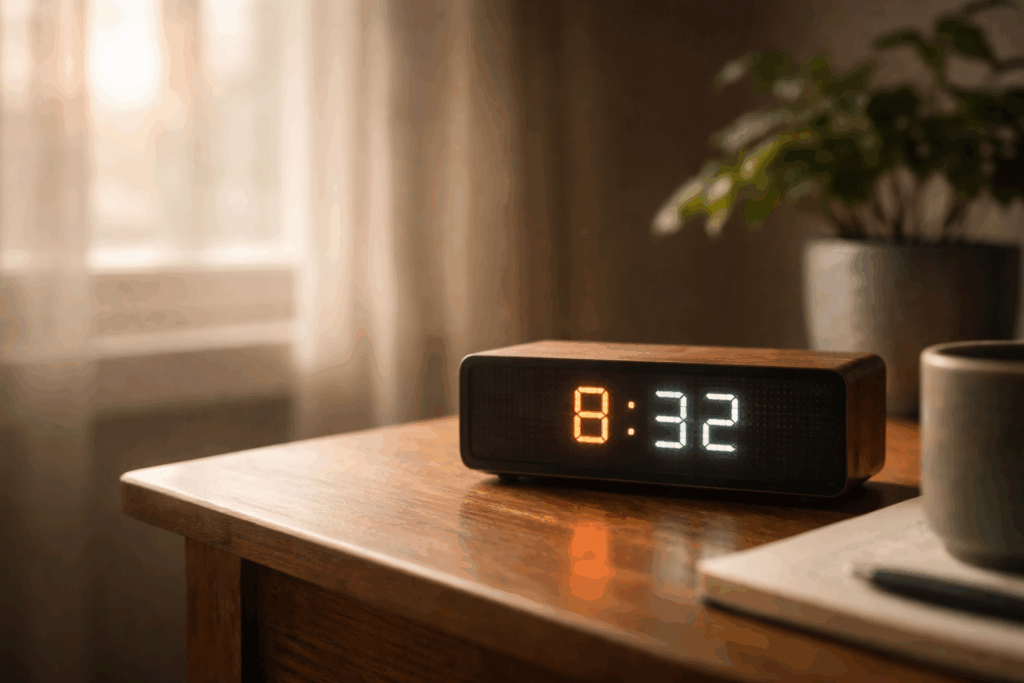
Time is visible here, but it does not intrude.
In the corner of the room, numbers glow faintly. They do not blink or animate. They do not escalate as minutes pass. They simply remain legible, indifferent to urgency.
No one checks the clock. It is glanced at, occasionally, the way one notices weather through a window. Not to measure productivity or confirm progress, but to remain oriented.
Earlier systems tried to make time actionable. They counted steps, tracked focus, segmented days into blocks that could be optimized. Time became something to manage, then something to defend against. In response, people learned to ignore it until it demanded attention.
That demand is gone now.
The clock does not sync itself to anything visible. It does not announce transitions or suggest what should happen next. It does not congratulate or warn. It does not attempt to be helpful.
Because of that, it is trusted.
Meetings begin when people arrive. Work pauses when the light shifts. Meals happen when hunger accumulates. The clock remains where it is, offering reference without instruction.
Sometimes the power flickers. Sometimes the room is empty for days. When someone returns, the time is still there-slightly off, perhaps, but close enough. Accuracy matters less than continuity.
Children learn time this way. Not as units to be spent or lost, but as a background condition. They learn that being late is a social problem, not a numerical one. They learn that moments do not expire because a display advances.
At night, the glow is dimmed further. It becomes part of the room rather than a point within it. Sleep arrives without negotiation.
Nothing records how long this takes.
The clock does not care.
It keeps time, but it does not keep score.