Chapter 3 – The Shape That Refuses
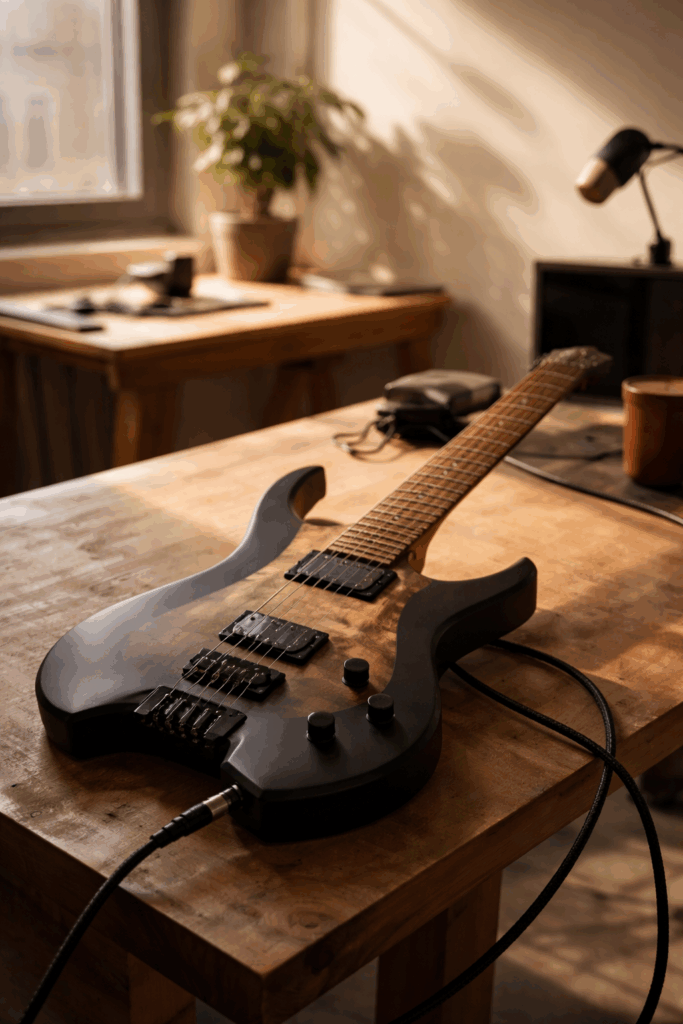
No one remarks on what is missing.
It rests where instruments rest in rooms like this: near the places people sit for long stretches of time, close enough to be reached without standing, far enough away that it is not an invitation. It is not positioned to be admired.
When he picks it up, his hands do not search.
There are objects that ask to be learned again each time. This is not one of them. It offers no ceremony. It does not announce a beginning. The first movement is not performance but placement—shoulder, forearm, fingertips. The body finds its own alignment without explanation.
The absence that once would have drawn attention is simply part of the shape.
In earlier years, design changes had to justify themselves. People demanded reasons. They asked what was gained, what was lost, what had been improved. Questions like that were usually just a polite way of resisting change.
Now, most change is invisible.
Systems reorganize themselves quietly. Interfaces dissolve and return in different forms. Tools adapt without asking permission. Against that backdrop, a visible refusal-an object that chooses a different silhouette-does not read as provocation. It reads as personal.
He does not correct anyone who calls it a guitar.
Language is approximate here, and approximation is allowed. Names are used for coordination, not precision. What matters is that it can be held, tuned by habit, returned to stillness without a protocol.
Later, someone younger picks it up and sits on the floor.
They do not ask why it looks like this.
They play only a few notes, not to practice, not to show progress, but to test the room-how the air holds sound, how the walls answer back. The notes are small. They are not meant to travel.
In the corner, a light shifts as the afternoon moves.
He watches without instruction. He does not point out fingerings or rhythm. The only thing he does is keep the room calm enough that the object remains what it is: a tool that does not compete.
When the younger one sets it down, it is not treated as fragile.
It is treated as durable in the oldest way-durable enough to be handled without anxiety.
Nothing about it insists that tradition was wrong.
It simply declines to perform tradition.
And in a world where so many things are eager to persuade, that quiet refusal is the reason it remains.